Therapist Resources

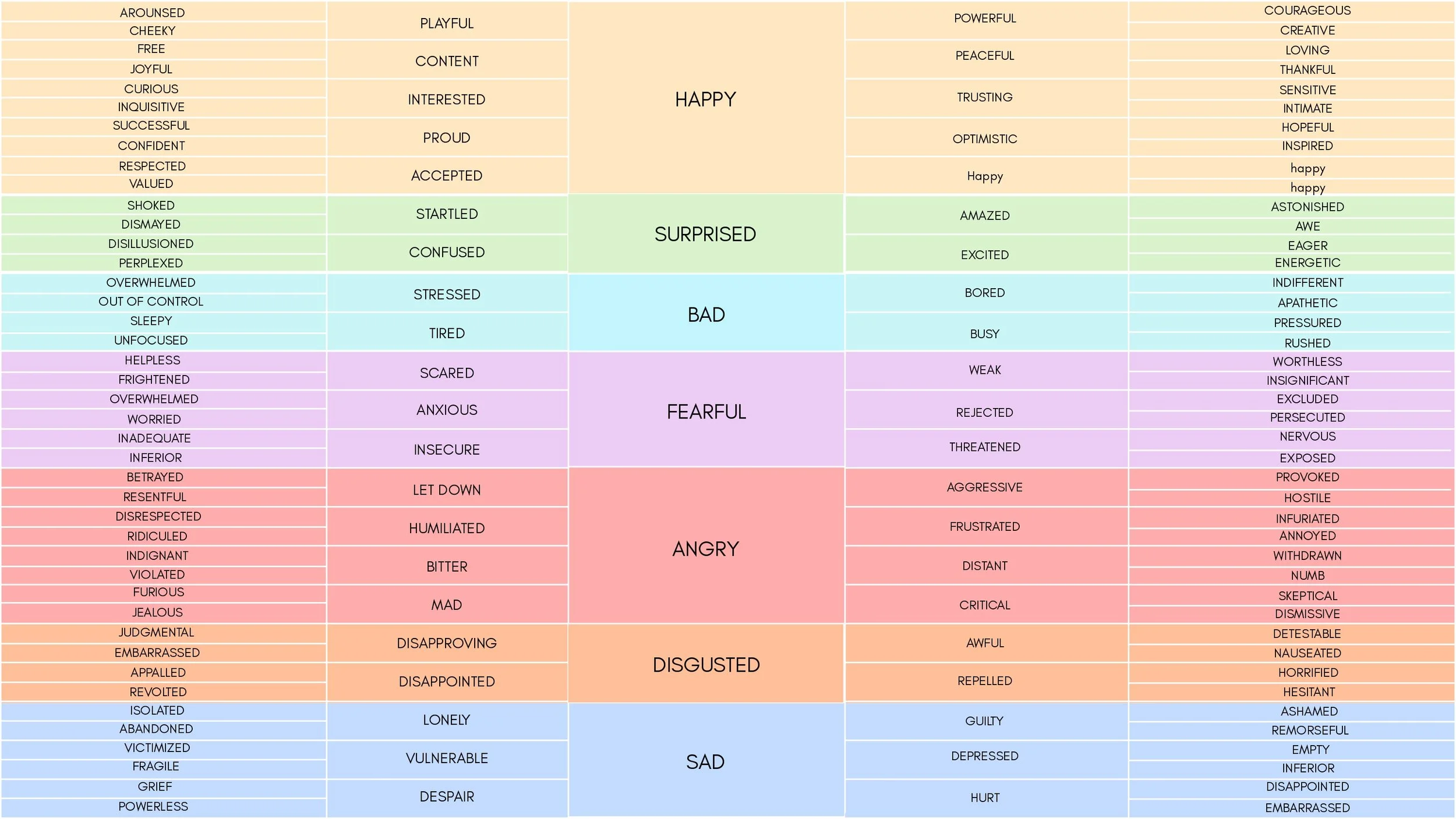
A color-coded chart categorizing words that describe various emotions. The categories include Happy, Surprised, Bad, Fearful, Angry, Disgusted, and Sad, with related words listed under each.
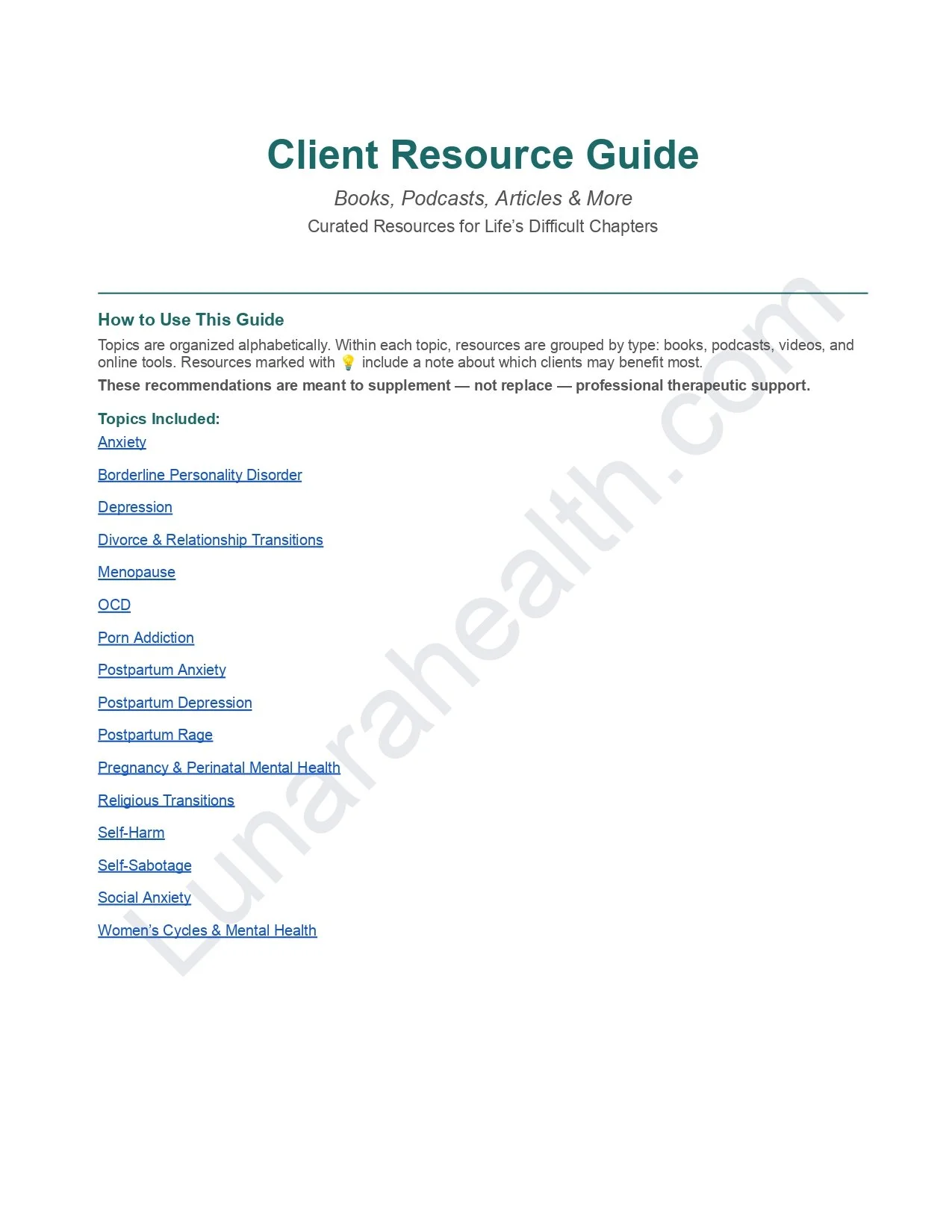
Screenshot of a client resource guide listing various mental health topics, including anxiety, depression, OCD, postpartum depression, and others, with links for further resources.
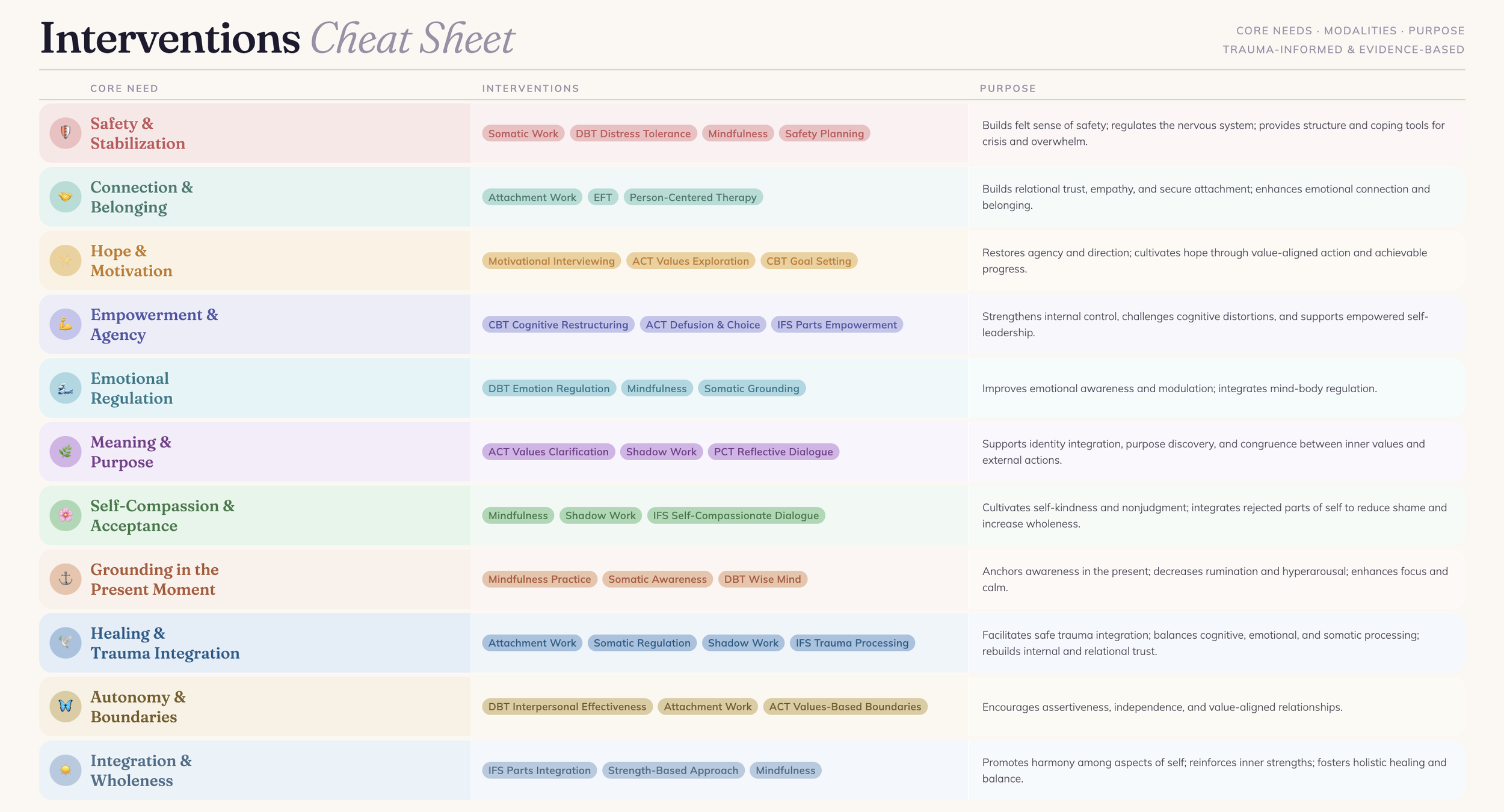
Table titled 'Interventions Cheat Sheet' listing core needs, interventions, and purposes.
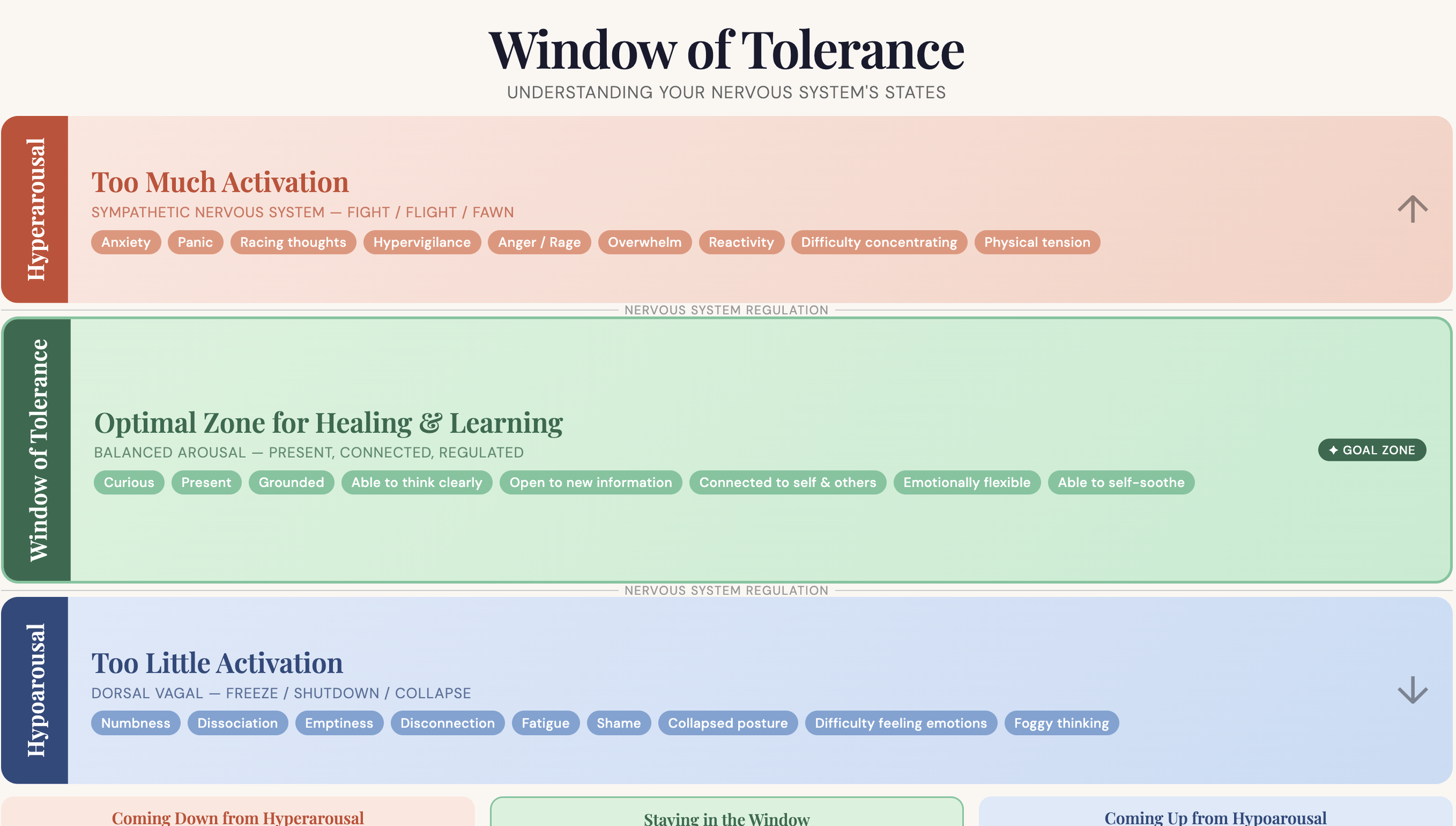
Diagram titled 'Window of Tolerance' with three sections: 'Too Much Activation' in pink, 'Optimal Zone for Healing & Learning' in green, and 'Too Little Activation' in blue, illustrating different nervous system states.
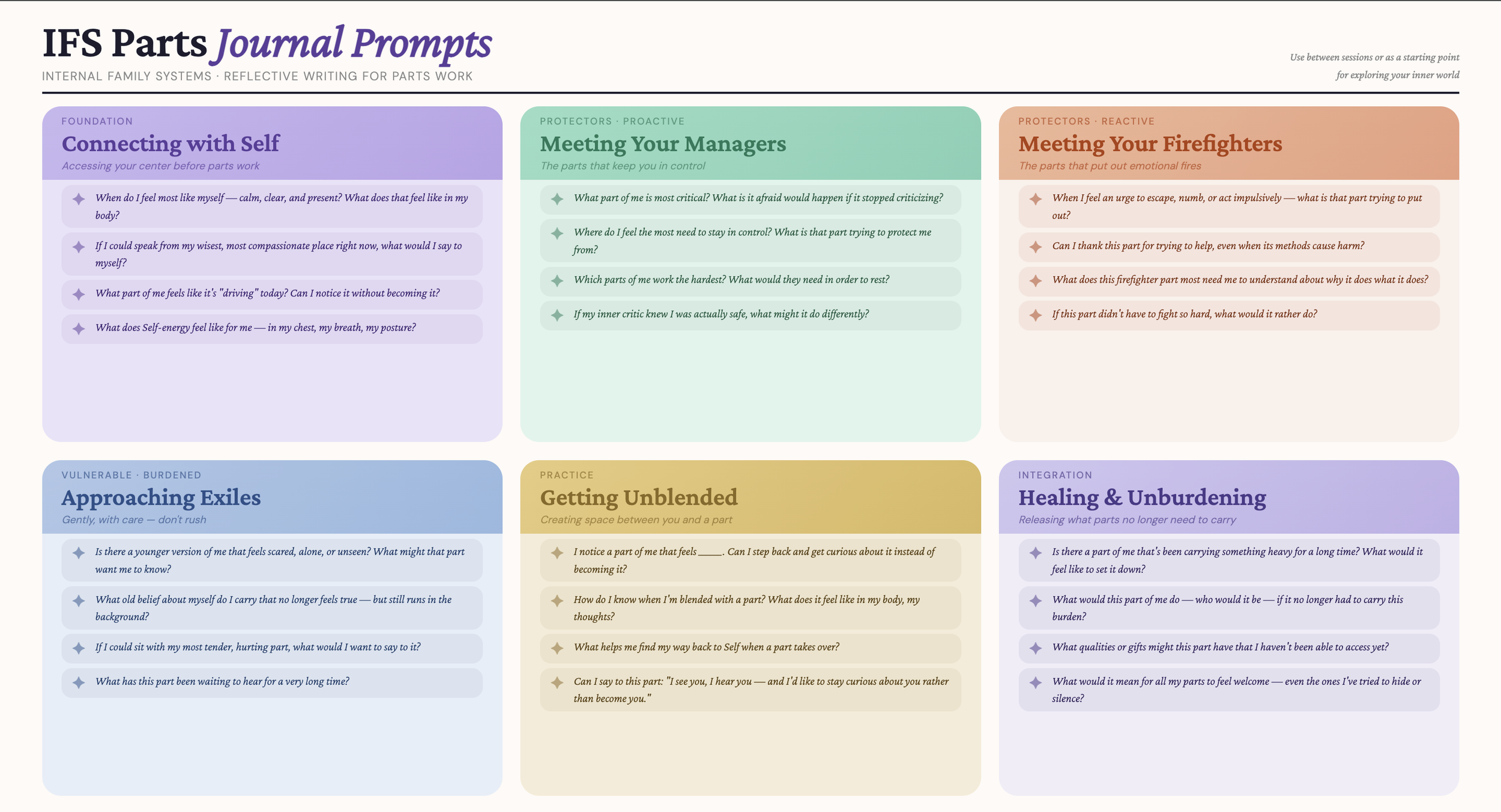
A colorful infographic titled "IFS Parts Journal Prompts" divided into six sections with different themes: Connecting with Self, Meeting Your Managers, Meeting Your Firefighters, Approaching Exiles, Getting Unblended, and Healing & Unburdening. Each section contains reflection prompts related to internal family systems therapy.
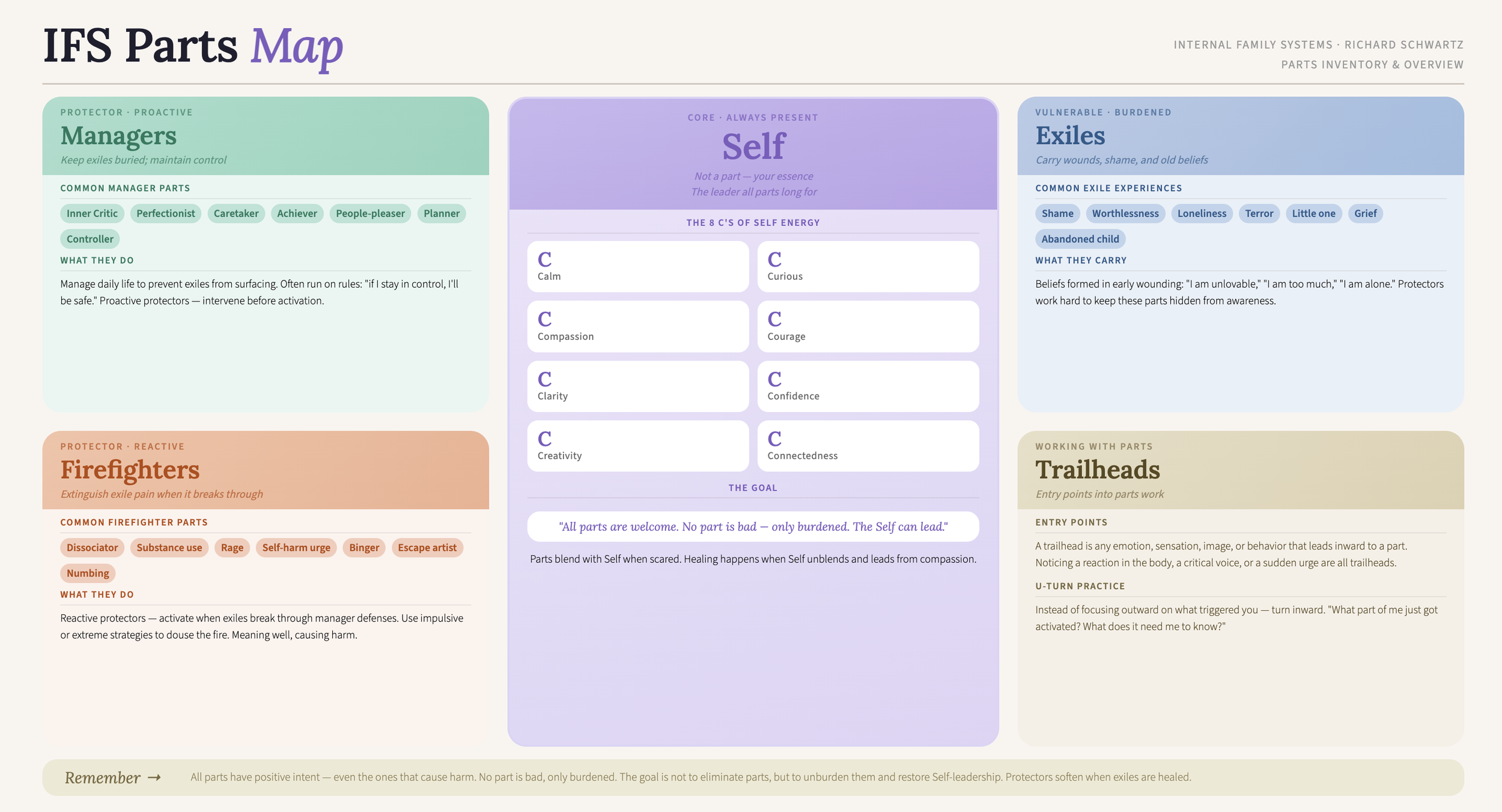
A color-coded infographic titled 'IFS Parts Map' with sections for Managers, Exiles, Firefighters, Self, and Trailheads. The Managers section is green, Exiles blue, Firefighters orange, Self purple, and Trailheads beige. Each section contains descriptive text and categories related to internal family systems therapy concepts.
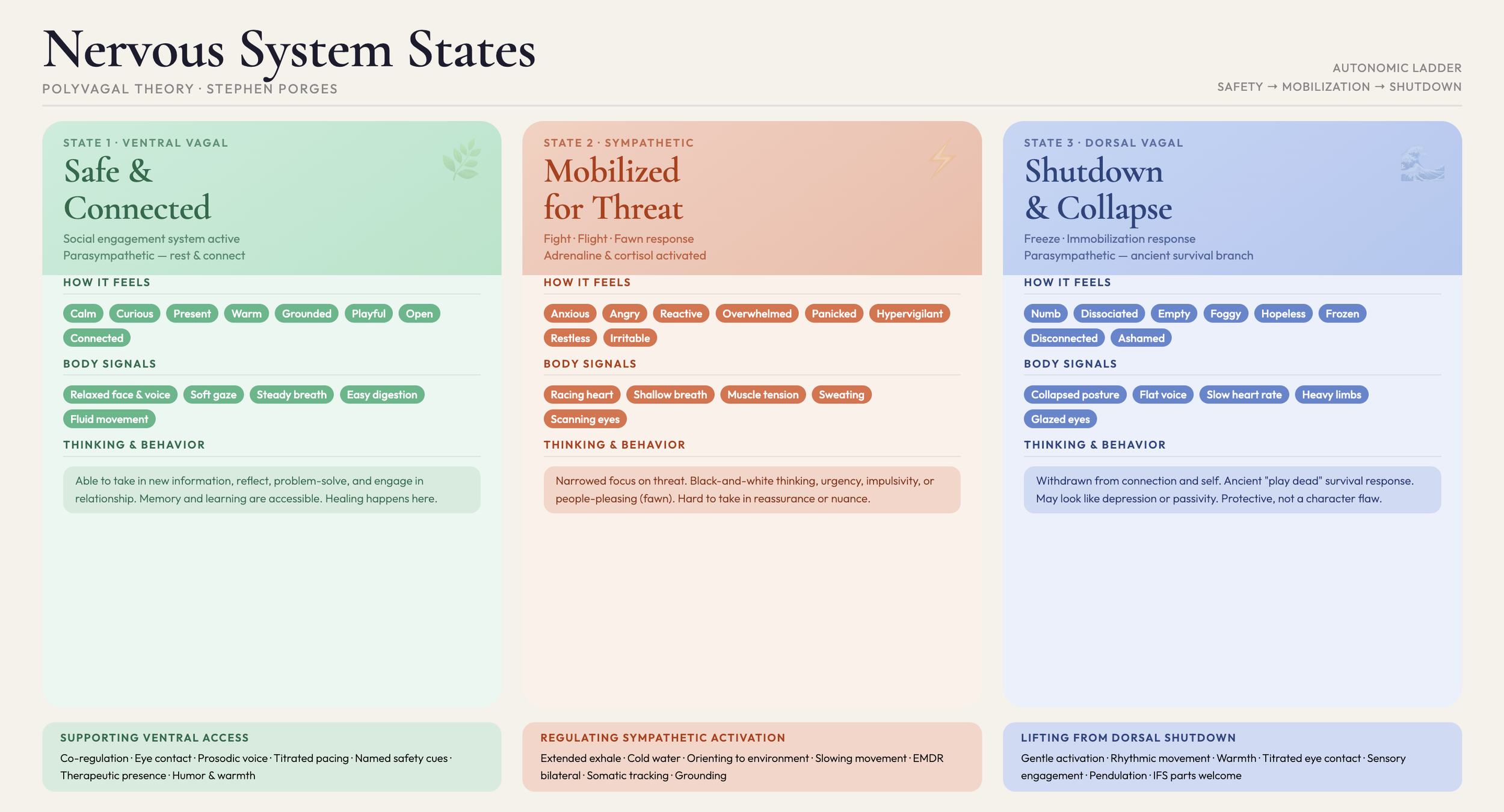
Diagram of the nervous system states with three sections labeled 'Safe & Connected,' 'Mobilized for Threat,' and 'Shutdown & Collapse,' each containing descriptions of feelings, body signals, thinking & behavior, and supporting or regulating information.

Join Our Team

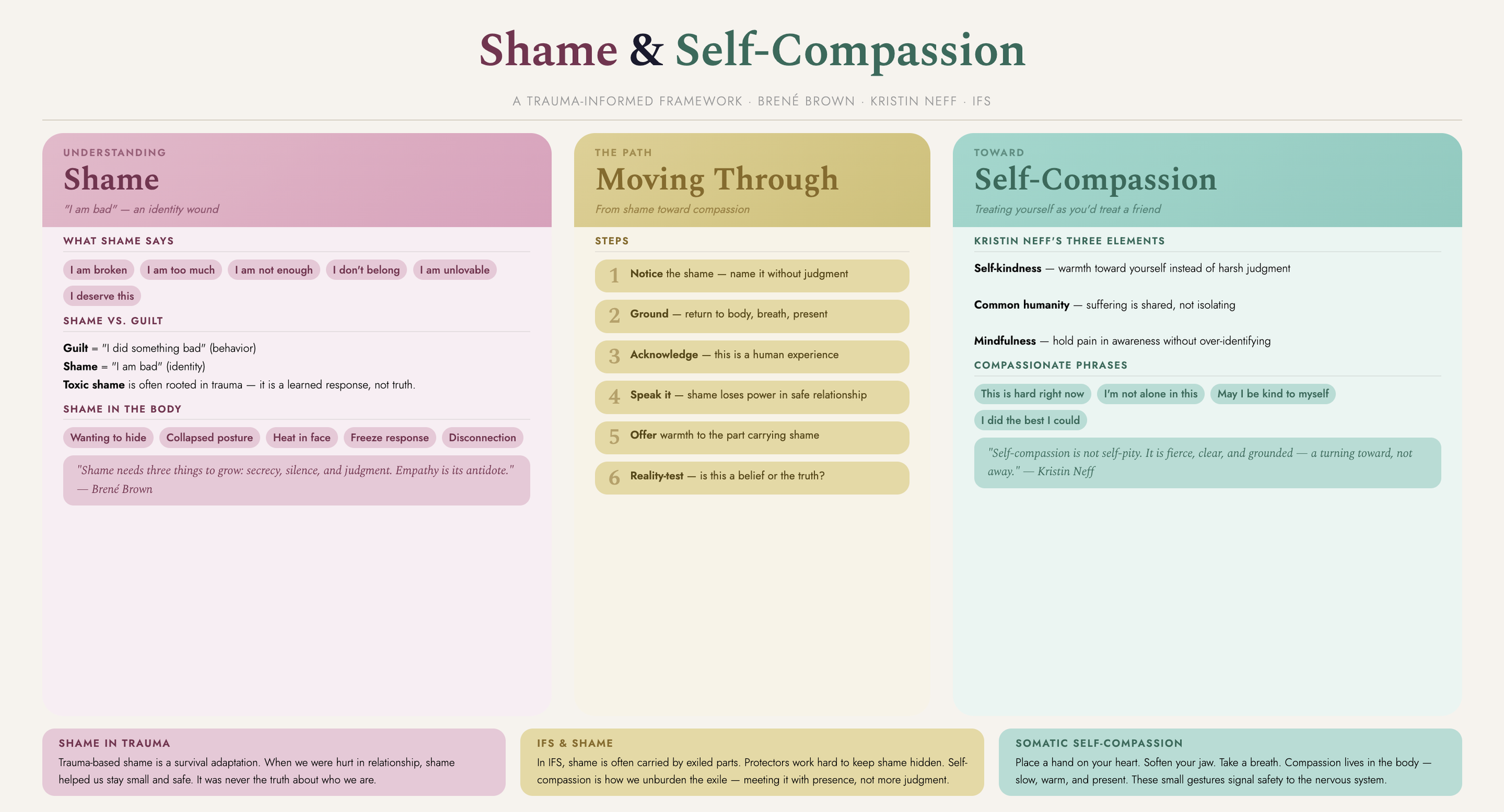
An infographic titled 'Shame & Self-Compassion' outlining a trauma-informed framework. It is divided into three sections: 'Shame' on the left in pink, 'Moving Through' in the middle in beige, and 'Self-Compassion' on the right in teal. The 'Shame' section discusses understanding shame, what shame says, shame vs. guilt, shame in the body, and shame in trauma. The 'Moving Through' section lists steps to move from shame toward compassion, including noticing shame, grounding, acknowledgment, speaking it, offering warmth, and reality-testing. The 'Self-Compassion' section emphasizes kindness, common humanity, mindfulness, compassionate phrases, and the physical act of self-compassion.
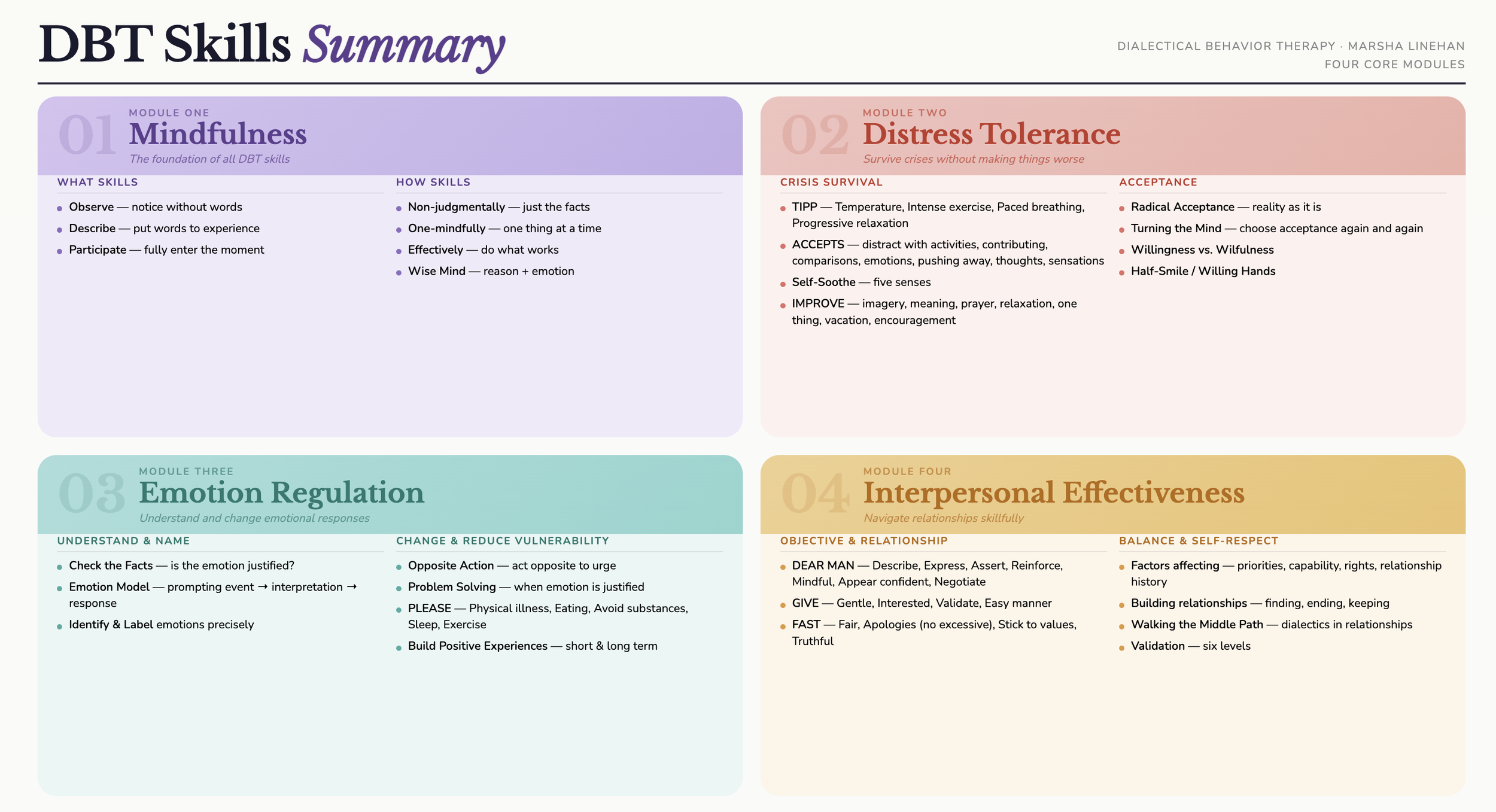
A colorful infographic summarizing four core modules of Dialectical Behavior Therapy (DBT) skills: Module 1 Mindfulness in purple, Module 2 Distress Tolerance in red, Module 3 Emotion Regulation in teal, and Module 4 Interpersonal Effectiveness in yellow, with key points and skills listed under each module.